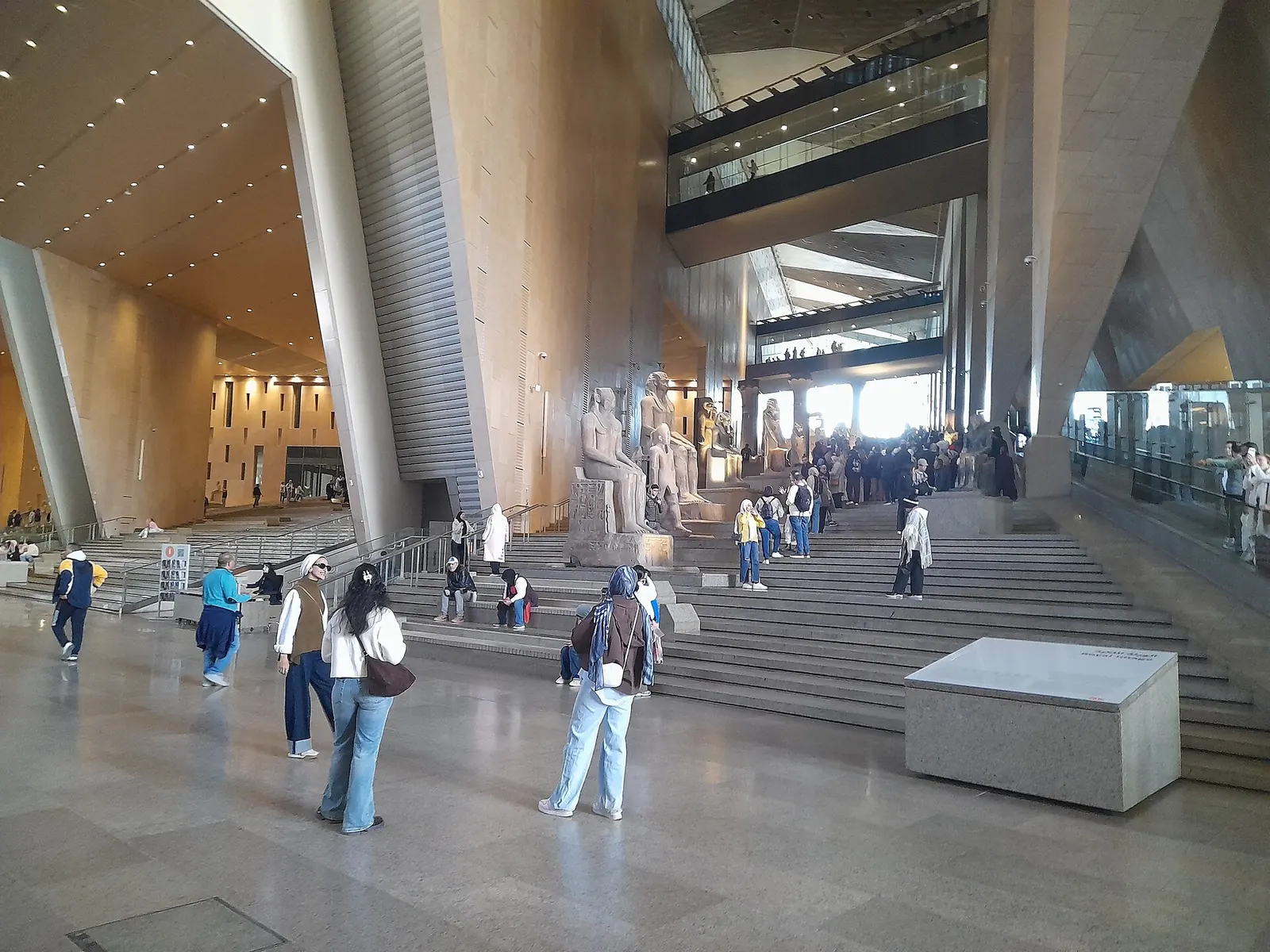
Walk into a chronological gallery and three thousand years can occupy thirty metres. Museums convert duration into sequence, adjacency and architectural distance.
Everything is present to the eye.
A stone made in one reign and a coffin painted centuries later can be visible without moving your feet. This creates comparison impossible in their original worlds. It also makes survival look normal: the room contains what endured, was collected and was selected, not a representative sample of everything that existed.
The newest event shared by every object is present display. Lighting, labels and cases synchronize them under one institutional clock.
Chronology is designed.
A museum can order by dynasty, ruler, century, style, site or theme. Each divides time differently. Smooth transitions between rooms may imply clean historical boundaries that archaeological evidence does not support.
Look for threshold devices: date bands, colour changes, maps and introductory panels. They reveal where the institution decided one period becomes another.
Absence has its own chronology.
Organic materials decay unevenly; excavation histories favour some sites; collecting practices privilege finished and elite objects. A gap in the gallery may reflect preservation, storage, acquisition or display rather than a period without activity.
Deep time becomes responsible when the museum shows these filters instead of presenting the surviving sequence as complete.
Break the timeline deliberately.
After following the official chronology, choose one material and move across periods. Stone, writing or vessel form produces a second timeline. Compare what changed, what persisted and whether similarity comes from function, revival or museum classification.
Research note
This essay draws on museum chronology, object biography and archaeological preservation. It treats gallery order as interpretation, not a transparent copy of historical time.